

In the medical aesthetic field, both beauty institutions and consumers share a common objective: improving skin conditions through scientifically guided treatments. However, treatment outcomes must be evaluated objectively to ensure high-quality service. Skin analysis plays a critical role in this process by providing reliable technical support for evidence-based and professional aesthetic care.
Why is Post-Treatment Skin Analysis Necessary for Evaluating Results?
Visual assessment alone often lacks accuracy as it can be influenced by lighting conditions and individual perception. As a result, subjective evaluation cannot provide reliable clinical evidence. In contrast, skin analyzers transform skin conditions into objective and quantifiable data.
These devices accurately measure changes in key parameters such as skin tone uniformity, hydration level, and collagen density. This data allows practitioners to objectively identify treatment outcomes and provides a scientific reference for adjusting future treatment strategies.
Additionally, post-treatment skin undergoes continuous physiological repair, and skin analyzers can monitor changes at different recovery stages. This enables clinicians to identify abnormal responses at an early stage and supports timely intervention and risk management.
What Indicators Does Skin Analysis Measure After Treatment?
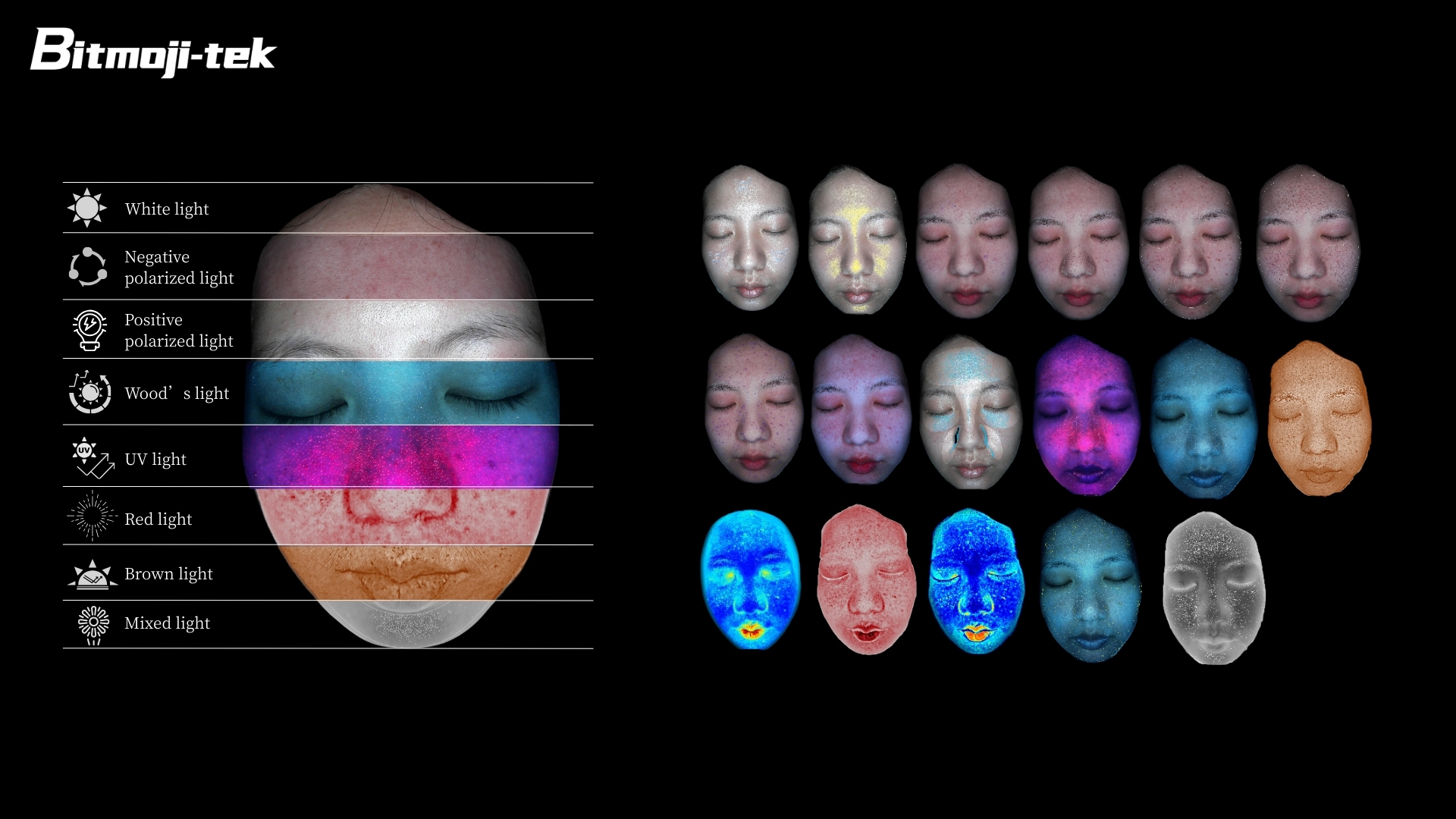
Post-treatment skin analysis focuses on three core categories of clinical indicators, with the Bitmoji-tek X6 AI Skin Analyzer serving as a representative example. This device uses automatic triple-camera imaging to deliver comprehensive skin assessments.
The first category includes basic skin function recovery indicators such as skin barrier integrity, stratum corneum hydration, and sebum secretion levels. Together, they reflect the restoration of fundamental skin functions after treatment.
The second category evaluates targeted treatment outcomes, with indicators varying according to the procedure performed. Examples include pigmentation index after spot removal, inflammation reduction after acne therapy, and skin elasticity following anti-aging treatments.
The third category focuses on skin tolerance and repair progression, with key parameters including erythema level and sensitivity score. These indicators assess the skin’s tolerance to treatment and its recovery status.
Beauty institutions can conduct post-treatment assessments at different time points. By comparing pre-treatment and post-treatment data, clinicians can evaluate treatment efficacy throughout the care cycle.
What Practical Value Does Post-Treatment Skin Analysis Bring to Beauty Institutions?
Post-treatment skin analysis offers several practical and clinical advantages.
First, it enables the scientific adjustment of care plans. Based on test data, medical staff can scientifically adjust care plans, optimizing subsequent treatment parameters and care processes according to skin repair progress and indicator changes. This improves treatment pertinence.
Second, it enhances client trust. Objective data visualization helps clients understand treatment outcomes more clearly, reducing information asymmetry and strengthening long-term client relationships.
Third, it elevates institutional professionalism. A data-centered evaluation system demonstrates clinical rigor and clinical credibility, significantly improving brand image and market competitiveness.
Conclusion
As the medical aesthetic industry continues to standardize, objective outcome evaluation has become an industry requirement. Post-treatment skin analysis promotes precision and consistency in aesthetic assessment, aligning with current industry development trends. For beauty institutions, adopting skin analyzers is a strategic necessity, improving service quality, reinforcing professional authority, and supporting the sustainable development of the industry.