

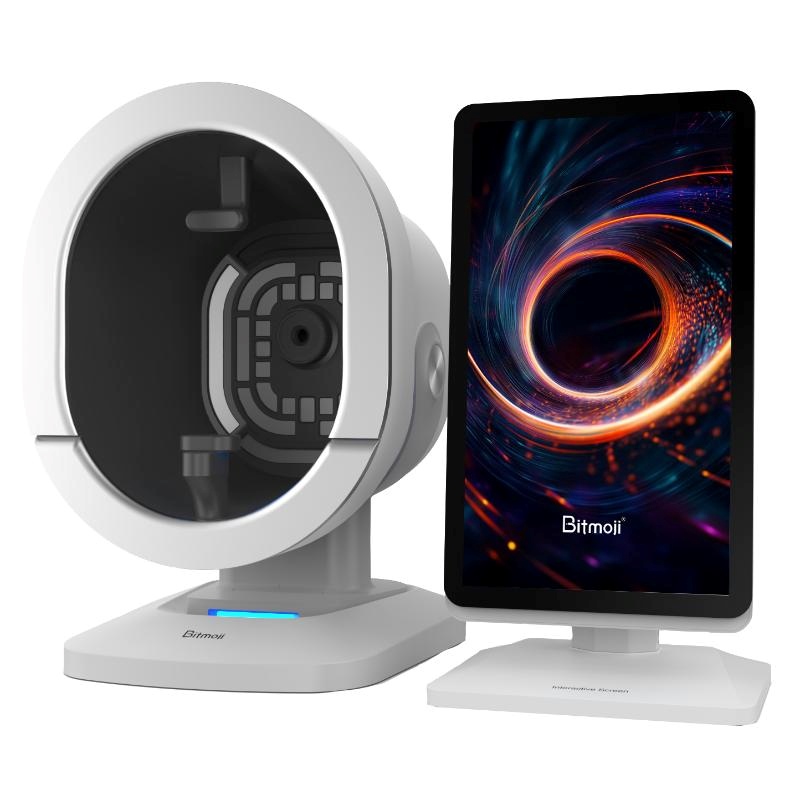
In modern skincare science, many skin concerns begin beneath the surface long before they become visible. Therefore, a smart skin analysis device plays an increasingly important role in detecting early and hidden skin conditions. Instead of relying only on visual observation, it uses imaging technology and data processing to reveal deeper skin layers. At Bitmoji-tek, advanced systems like the X1 AI intelligent imaging device are designed to provide objective and multi-dimensional skin evaluation. Moreover, it integrates multispectral imaging technology to improve diagnostic accuracy.
1. Multispectral Imaging for Layer-by-Layer Detection
To begin with, deep skin analysis depends heavily on multispectral imaging technology. This method captures different wavelengths of light, allowing the device to observe both surface and sub-surface skin structures. As a result, a smart skin analysis device can detect issues such as pigmentation buildup, pore blockage, and early inflammation that are not visible to the naked eye. Furthermore, by combining multiple spectral inputs, the system builds a more complete skin profile rather than a single surface image. In addition, the X1 AI imaging system uses up to eight spectral channels, which significantly improves diagnostic depth and clarity.
2. AI Image Processing and Pattern Recognition
Secondly, after image capture, AI algorithms process the collected data to identify skin patterns. This step is essential for transforming raw images into meaningful skin health insights. Because of this, a smart skin analysis device can recognize fine variations in texture, moisture levels, and skin tone distribution. Moreover, machine learning models compare results with large dermatological datasets to improve accuracy over time. In addition, Bitmoji-tek systems are designed to analyze multiple skin conditions simultaneously, helping users understand complex skin interactions rather than isolated symptoms.
3. Detection of 17 Core Skin Conditions
Furthermore, advanced systems like the X1 AI imaging device are capable of analyzing up to seventeen different skin concerns. These may include hydration imbalance, oil secretion, pigmentation irregularities, redness, and pore enlargement. As a result, the smart skin analysis device provides a structured and objective overview of skin health status. Moreover, this multi-point detection system allows professionals to identify root causes rather than surface symptoms. In addition, this structured analysis supports more targeted skincare strategies, improving both prevention and correction outcomes.
4. Deep Layer Analysis Through Light Penetration
In addition, different light wavelengths penetrate the skin at different depths. For example, visible light mainly reflects surface conditions, while polarized and UV light can reveal bigger structural changes. Therefore, a smart skin analysis device uses controlled lighting environments to examine skin layers more comprehensively. Furthermore, this layered approach helps detect early signs of aging, collagen loss, and underlying inflammation. As a result, users gain a more complete understanding of skin health trends over time.
5. One-Click Imaging and Automated Reporting
Moreover, usability is a key advantage in modern skin analysis systems. Devices like the X1 AI imaging instrument are designed for one-click capture and automatic report generation. Because of this, users can quickly obtain professional-level analysis without complex operations. Additionally, the system instantly processes images and generates structured reports, improving efficiency in both clinics and beauty environments. In Bitmoji-tek solutions, this automation enhances workflow while maintaining analytical precision.
6. Real-World Application in Skin Management
Finally, deep skin analysis is not only about detection but also about long-term monitoring. By tracking changes over time, a smart skin analysis device helps users understand how their skin responds to environmental stress, skincare routines, and lifestyle changes. Furthermore, this continuous data collection allows for more personalized skin management strategies and better prevention of future skin issues.
Conclusion
In conclusion, a smart skin analysis device detects deep skin issues through multispectral imaging, AI-driven pattern recognition, and layered light analysis. Combined with advanced systems like Bitmoji-tek’s X1 AI imaging device, it enables accurate, multi-dimensional, and data-driven skin evaluation. Ultimately, this technology transforms skincare from surface observation into a precise and intelligent diagnostic process, offering clearer insights into both visible and hidden skin conditions.