

In modern beauty technology, many professionals ask whether a facial AI intelligent imager performs equally across different skin tones. This question is important because skin analysis systems are widely used in dermatology clinics, beauty salons, and cosmetic retail environments. Therefore, understanding how AI responds to variations in pigmentation helps ensure fair and accurate diagnostic outcomes. In addition, real-world conditions are often more complex than controlled laboratory training data.
How Multispectral Imaging Improves Fairness and Accuracy
A facial AI intelligent imager typically combines multispectral imaging with artificial intelligence algorithms to analyze skin conditions. For example, different light wavelengths penetrate the skin at varying depths, allowing the system to detect dehydration, oil imbalance, pigmentation, and acne-related issues. Meanwhile, this technology reduces reliance on visible-light assumptions, which helps improve consistency across diverse skin tones. As a result, the system can generate more balanced analytical results compared to traditional visual inspection methods.
Does Skin Tone Affect AI Recognition Performance?
In practice, accuracy can vary slightly depending on dataset quality and calibration methods. However, a well-trained facial AI intelligent imager minimizes these differences by using diverse training datasets that include multiple ethnicities and pigmentation levels. In addition, modern algorithms adjust exposure, contrast, and spectral response automatically. Therefore, performance gaps between lighter and darker skin tones are significantly reduced in advanced systems.
Bitmoji-tek Skin Analysis Technology Approach
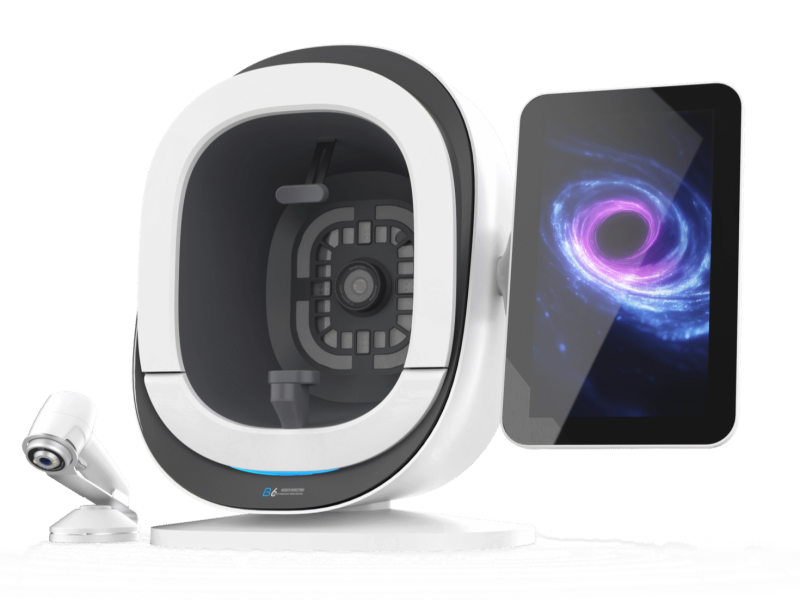
Bitmoji-tek develops advanced skin analysis solutions that focus on precision and inclusivity. For instance, the system integrates AI-driven evaluation with clinical-grade multispectral imaging to ensure consistent diagnostic output. Meanwhile, the skin condition analysis system can detect dehydration, oil imbalance, pigmentation issues, enlarged pores, fine lines, acne types, and skin sensitivity in a single scan. In addition, this facial AI intelligent imager generates structured, data-driven reports that help professionals create personalized skincare plans. As a result, beauty clinics and dermatology centers can provide more targeted and effective treatments for clients with different skin tones.
Why Data Diversity Matters in AI Skin Analysis
One key factor affecting accuracy is dataset diversity. If training data lacks representation from different skin tones, the system may show bias in certain conditions such as pigmentation detection. However, a properly optimized facial AI intelligent imager uses balanced datasets and continuous learning models. Moreover, feedback loops from real-world usage further improve accuracy over time. Therefore, inclusivity in data collection directly enhances diagnostic reliability.
Real-World Performance in Beauty and Medical Applications
In practical use, Bitmoji-tek systems demonstrate stable performance across beauty salons, skincare clinics, and cosmetic retail stores. In addition, the intuitive interface and compact design allow daily use without reducing clinical precision. Meanwhile, the built-in consultation tools improve communication between professionals and clients, increasing trust in the analysis results. As a result, the facial AI intelligent imager becomes not only a diagnostic device but also a customer engagement tool. Furthermore, it helps professionals deliver consistent results regardless of skin tone differences.
Conclusion
In conclusion, while minor variations in accuracy can exist due to dataset quality and environmental factors, modern AI systems significantly reduce bias across different skin tones. A well-designed facial AI intelligent imager, such as those developed by Bitmoji-tek, ensures stable, inclusive, and clinically reliable skin analysis. Therefore, it provides a strong foundation for accurate skincare diagnostics in both medical and commercial applications.