

Many scalp issues remain hidden until the damage becomes obvious. By the time scalp health declines, it may be too late to reverse the damage. However, AI scalp analyzers change this. These devices go beyond what the human eye can see, using advanced imaging and intelligent algorithms to reveal early-stage scalp problems quickly and accurately.
How AI Scalp Analyzers Work
Core Technical Principles
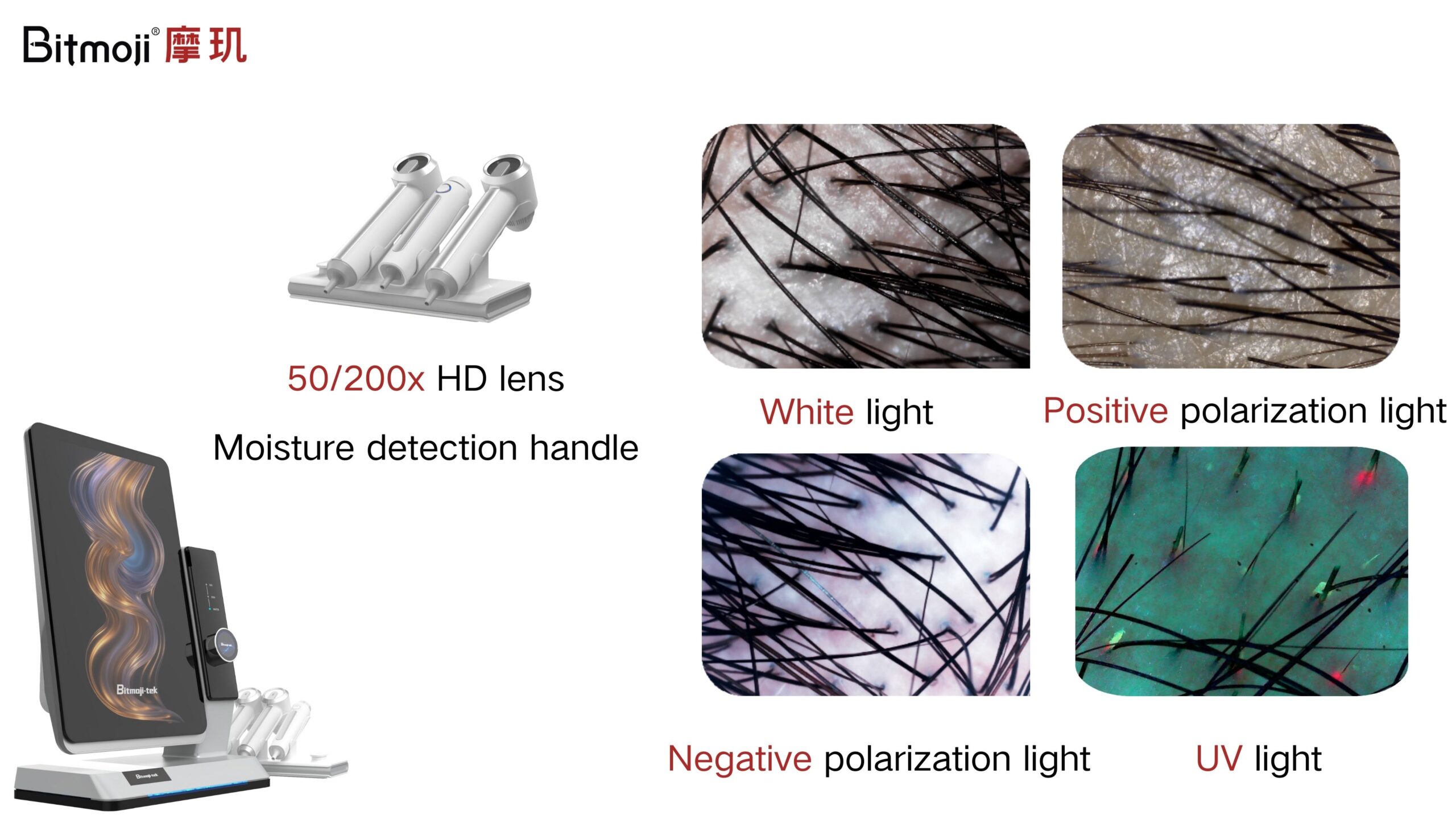
Take the Bitmoji T8 Scalp Analyzer as an example. It uses a 50/200x HD lens and four-spectrum imaging technology to scan the scalp under white light, positive polarized light, negative polarized light, and UV light. This multi-angle view captures tiny follicle details and deep scalp conditions with great clarity.
Additionally, the device utilizes a deep learning algorithm trained on over 100,000 clinical samples. The algorithm automatically marks problem areas and runs a full quantitative analysis, generating a detailed visual report with multiple indicators in just three minutes.
How It Differs from Traditional Detection
Traditional detection relies on technicians’ experience, which can lead to inconsistency and subjective judgment. This also makes it difficult to detect deeper issues.
In contrast, the AI technology reads visual data, eliminating guesswork and keeping the error rate below 3%. It not only shows surface symptoms clearly but also reveals deep issues such as dermal inflammation and follicle atrophy. Furthermore, the detection speed is more than 10 times faster than manual checks.
5 Types of Hidden Scalp Issues It Detects Precisely
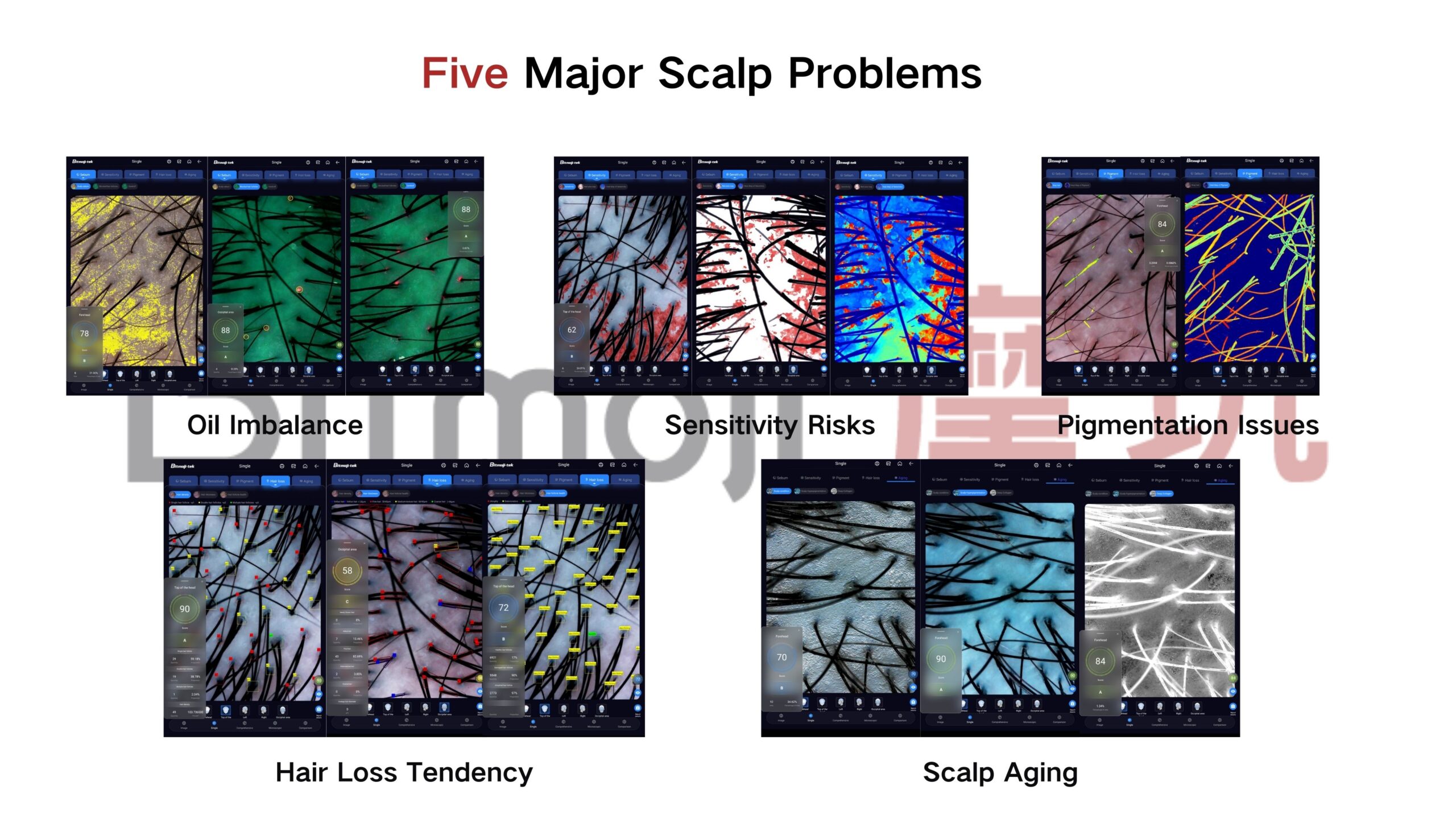
The Bitmoji T8 Scalp Analyzer excels in early detection, identifying five major scalp problems that often go unnoticed. These include oil imbalance, sensitivity risks, pigmentation issues, hair loss tendency, and scalp aging.
Oil Imbalance
Under positive polarization light, the device can detect the unique pattern of oil reflection and measure both the amount and distribution of oil.
Excess oil can clog hair follicles, leading to bacteria and fungal growth, which may result in seborrheic dermatitis, folliculitis, or even hair loss.
On the other hand, insufficient oil can dry out the scalp, causing dandruff and making hair brittle.
Sensitivity Risks
Using negative polarization light, the device can highlight broken capillaries and analyze the area, depth, and severity of redness. It then classifies hidden inflammation levels, helping users protect sensitive scalp zones early on.
Pigmentation Issues
The AI calculates the exact percentage of pigmented areas, checks for gray hair and melanin loss, and presents the data in an intuitive format.
Hair Loss Tendency
The analyzer measures key indicators such as
- Follicle density
- Hair thickness
- Follicle health
These metrics reveal early hair loss trends. Users can act before noticeable thinning occurs.
Scalp Aging
The device assesses scalp elasticity, wrinkle count, and pigmentation, and evaluates collagen loss as well. This exposes the first signs of scalp sagging and aging.
Application Value of AI Scalp Analyzers
Personalized Scalp care Plans
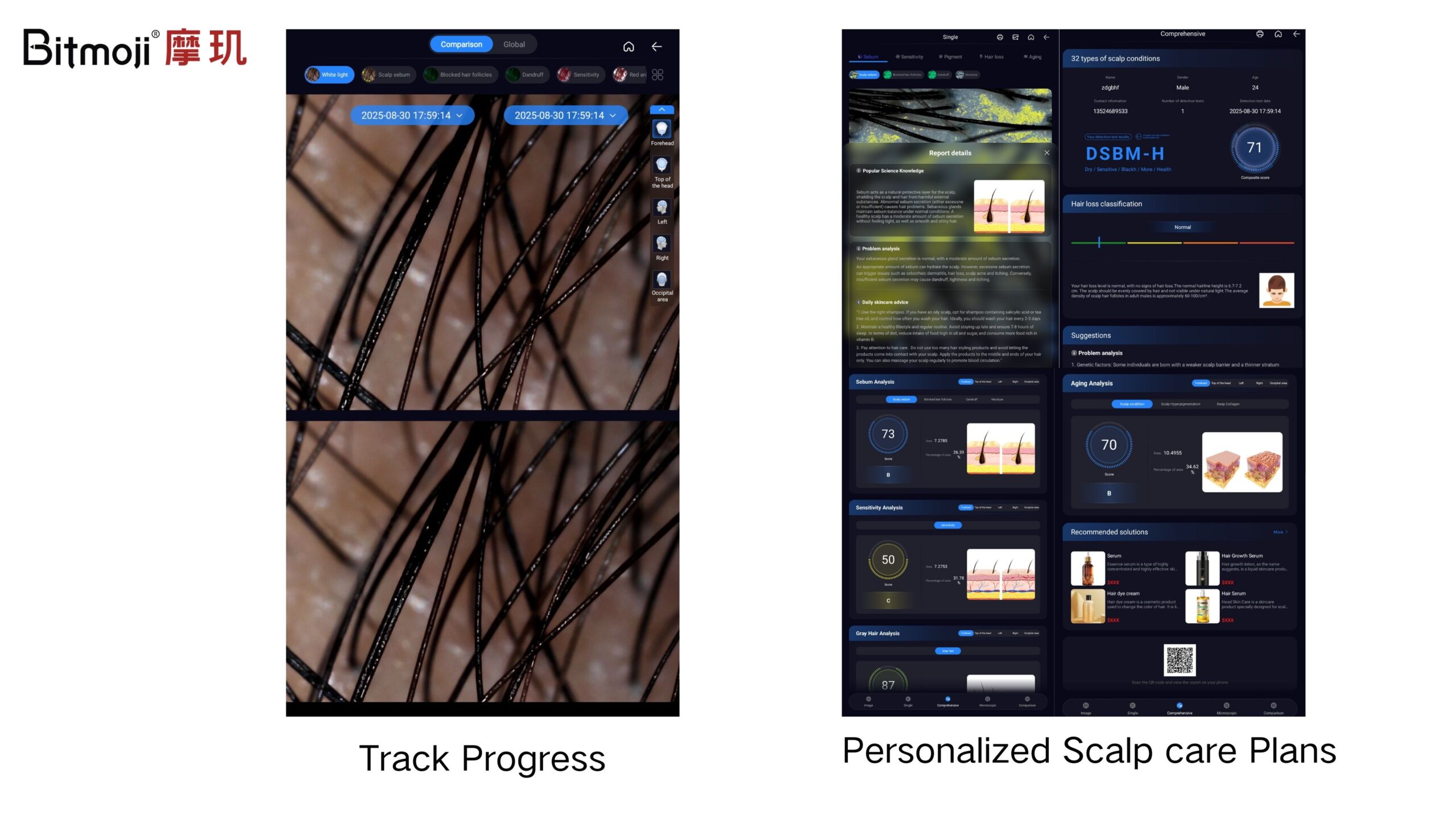
Using the detection data, the AI can analyze scalp types intelligently and recommend suitable care programs and products. It also provides personalized insights and daily care tips.
Track Progress and Encourage Repurchase
The device stores detection data in the cloud, allowing for regular retests and clear before-and-after comparisons. This enables users to monitor improvements easily, boosting confidence and encouraging repurchase.
Salon Professionalism Boost
Standardized detection shortens training time for new staff, and salons can recommend products based on objective data. The visual reports also help build trust and enhance customer satisfaction.
Conclusion
AI scalp analyzers bridge the gap between scalp problems and effective solutions, supporting both personal health management and professional salon services. As a result, they are driving a new, intelligent era in scalp health management.