
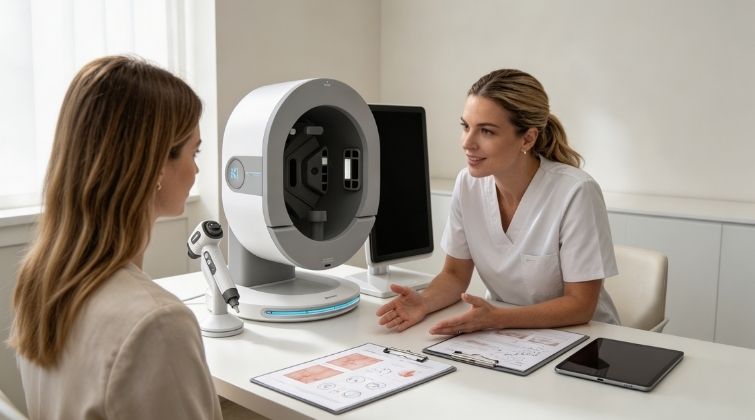
AI skin analyzers can now collect skin images, analyze skin conditions, generate reports, and track changes over time.
As AI technology enters the beauty and skin care industry, it is changing how professionals assess and manage skin. This also raises an important question.
If an AI skin analyzer can analyze skin, what role does a professional skin consultant still play?
To answer this question, we need to understand what AI skin analysis can do and what it cannot replace.
What Can an AI Skin Analyzer Do?
AI skin analysis converts skin conditions into structured,visual data. It gives professionals a more consistent way to assess skin.
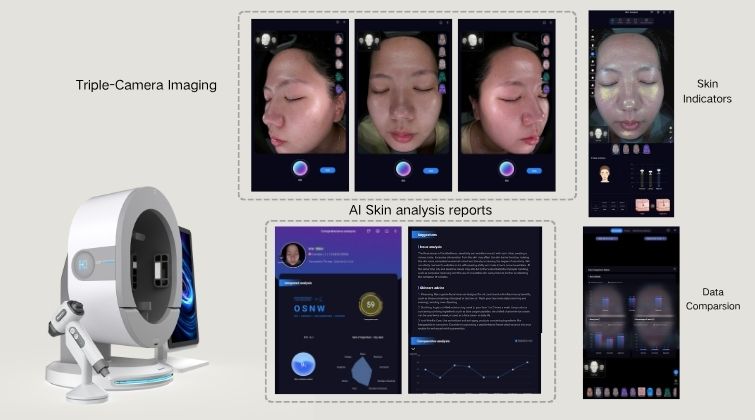
The Bitmoji-tek K76 AI Skin Analyzer combines professional imaging with AI-powered analysis and supports several key steps in the skin consultation process.
1. Collect Skin Data
Accurate skin analysis starts with reliable data.
Traditional skin consultations often rely on visual observation and client descriptions. However, results can vary between consultants and testing conditions.
An AI skin analyzer uses standardized imaging to capture facial skin images. This provides a consistent data source for further analysis.
Standardized imaging also makes it easier to compare results over time.
2. Analyze Multiple Skin Indicators
After image capture, AI can analyze different aspects of skin condition.
Skin health involves more than one factor. Skin tone, pigmentation, pores, texture, oil, and moisture can all provide useful information.
The Bitmoji-tek K76 processes skin images and analyzes four key dimensions: oil, sensitivity, pigmentation, and aging.
It then turns complex image data into clear, easy-to-understand results.
This helps consultants understand a client’s current skin condition more efficiently. It also provides a stronger data foundation for the consultation.
3. Generate Skin Analysis Reports
After analysis, the Bitmoji-tek K76 organizes the results into a comprehensive skin analysis report.
The report brings skin images, analysis results, skin scores, and skin type information in one place. This gives clients a clearer view of their current skin condition.
It also helps consultants explain the results during the consultation.
As a result, consultants can spend less time organizing basic information. They can focus more on understanding the client’s needs and providing professional advice.
4. Track Changes Over Time
AI skin analysis is not only useful for understanding the current condition but also helps track changes over time.
An AI skin analyzer can record results from different sessions. Consultants can then compare skin conditions before and after a treatment or during different stages of skin management.
Over time, these records can build a more complete view of a client’s skin journey.
This data can also support follow-up consultations and future treatment planning.
5. Support Client Communication
Skin consultation is ultimately about helping clients understand their skin.
Many clients are not familiar with professional skin care terms. Verbal explanations alone may not always be easy to understand.
Visual images and analysis results make the consultation more accessible.
Consultants can use the AI skin analysis report to explain specific skin concerns and areas that may need attention.
Clients can also see their results directly. This helps them better understand their skin and participate in their own skincare decisions.
So, if an AI skin analyzer can collect data, analyze skin, generate reports, and track changes, can it replace a professional skin consultant?
Can an AI Skin Analyzer Replace a Professional Skin Consultant?
AI can handle many basic skin analysis tasks. However, professional skin consultation involves much more than analyzing skin images.
A complete consultation also requires client communication, professional judgment, and personalized recommendations.
Therefore, an AI skin analyzer works best as a professional support tool.
1. It Cannot Fully Understand Client Needs
AI analyzes skin conditions. A professional consultant also needs to understand the person behind the data.
Two clients may have similar skin analysis results but different concerns.
One client may focus on skin tone. Another may care more about pores or long-term skin management.
Their skin care habits and personal goals may also differ.
Consultants can learn this information through direct communication. AI skin analysis alone cannot provide the full picture.
2. It Cannot Replace Professional Judgment
AI can provide skin data and analysis results. However, these results are not the same as a professional assessment.
Consultants need to interpret the results in the context of each client.
They must identify the most relevant concerns. They also need to decide which findings require more attention.
AI provides the data. The consultant applies professional knowledge to interpret it.
3. It Cannot Build Human Trust
Professional skin consultation is also a human service.
Clients want to understand their results. They also want clear answers to their questions and practical advice based on their needs.
A professional consultant can listen, explain, and respond throughout the consultation.
AI can provide objective information. However, it cannot fully replace the communication and trust built between a consultant and a client.
4. It Cannot Decide the Final Care Plan
Skin analysis results can support a care recommendation. However, they should not automatically determine the final plan.
Consultants need to consider several factors. These include skin condition, previous care, client needs, and the specific service available.
They can then use the AI results as part of a broader professional assessment.
This is why an AI skin analyzer should support the consultant rather than replace the entire consultation process.
These are also the core strengths of professional skin consultants.
Therefore, consultants should continue to develop their professional knowledge and service skills. By combining AI skin analysis with professional judgment, they can provide more accurate and personalized consultations.
This approach can also improve the client experience and make the consultation process more efficient.
How Can AI Skin Analyzers Change the Skin Consultation Process?
An AI skin analyzer does more than add another testing step. It can improve the entire consultation workflow.
Traditional Skin Consultation:
Client communication → Visual observation → Professional assessment → Care recommendation
In a traditional process, consultants rely heavily on observation and experience.
The process can be effective. However, it may provide limited objective data for comparison and follow-up.
AI-Assisted Skin Consultation:
Client communication → AI skin analysis → Data review → Professional assessment → Personalized recommendation → Follow-up analysis → Change tracking
AI adds a structured data layer to the consultation.
The AI skin analyzer collects and analyzes skin data. The consultant then interprets the results and connects them with the client’s needs.
For aftercare, another skin analysis can provide updated results. Consultants can compare the data and track changes over time.
This creates a more complete consultation process.
It also helps shift skin consultation from a one-time assessment to ongoing skin management.
The Future of Professional Skin Consultation
AI skin analyzers will continue to influence how professionals work.
As the technology develops, professional skin consultation is likely to move toward three key directions.
1. From Experience-Based Assessment to Data-Supported Decisions
Professional experience will remain important.
However, consultants can now combine their knowledge with AI-generated skin data.
This gives them more information when assessing a client’s skin. It can also improve the consistency and completeness of the consultation.
AI does not replace professional experience. Instead, it gives consultants better data to support their decisions.
2. From One-Time Consultation to Long-Term Skin Management
Traditional consultations often focus on a single visit.
AI skin analyzers make it easier to record and review skin data across multiple sessions.
Consultants can compare results from different stages. They can also adjust future care recommendations based on changes in skin condition.
As a result, skin consultation can become part of a longer-term skin management process.
3. From Standardized Services to Personalized Care
AI can make skin analysis faster and more consistent. However, every client has different skin conditions and goals.
The future of skin consultation will combine standardized data collection with personalized professional advice.
AI can quickly collect and analyze skin data. Consultants can then use those results to understand individual needs and provide more targeted recommendations.
This combination can create a more efficient and personalized consultation experience.
Conclusion
AI skin analyzers are changing how professionals assess and manage skin. They can collect skin data, analyze multiple indicators, generate reports, and track changes over time.
However, professional skin consultation involves more than skin analysis. Understanding client needs, applying professional judgment, building trust, and providing personalized care still require human expertise.
The future is not about AI replacing skin consultants. It is about using AI to support them. With the right combination of AI skin analysis and professional expertise, consultants can deliver more efficient, data-supported, and personalized skin consultation experiences.
For more information about the Bitmoji-tek K76 AI Skin Analyzer, visit https://www.bit-moji.com/.